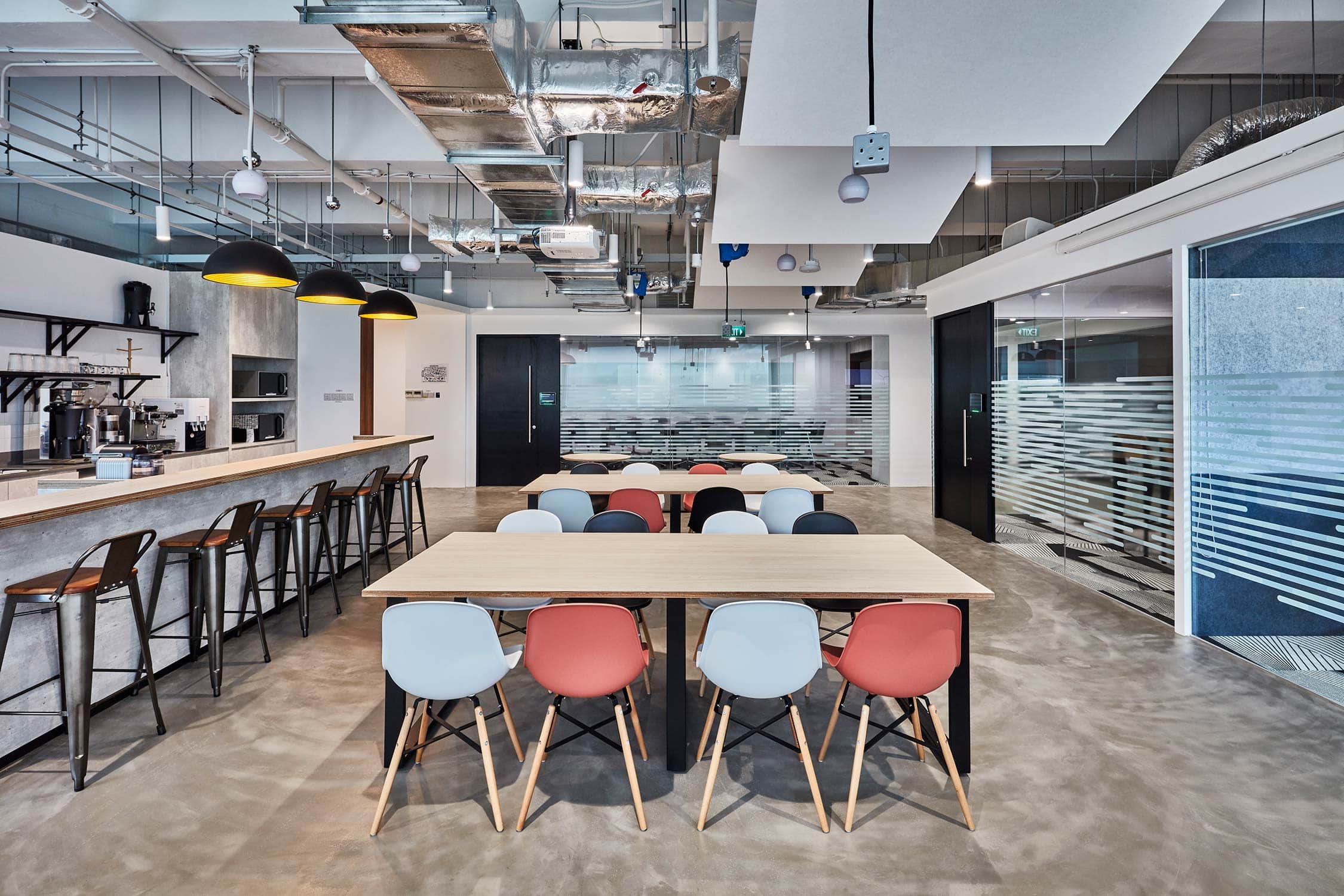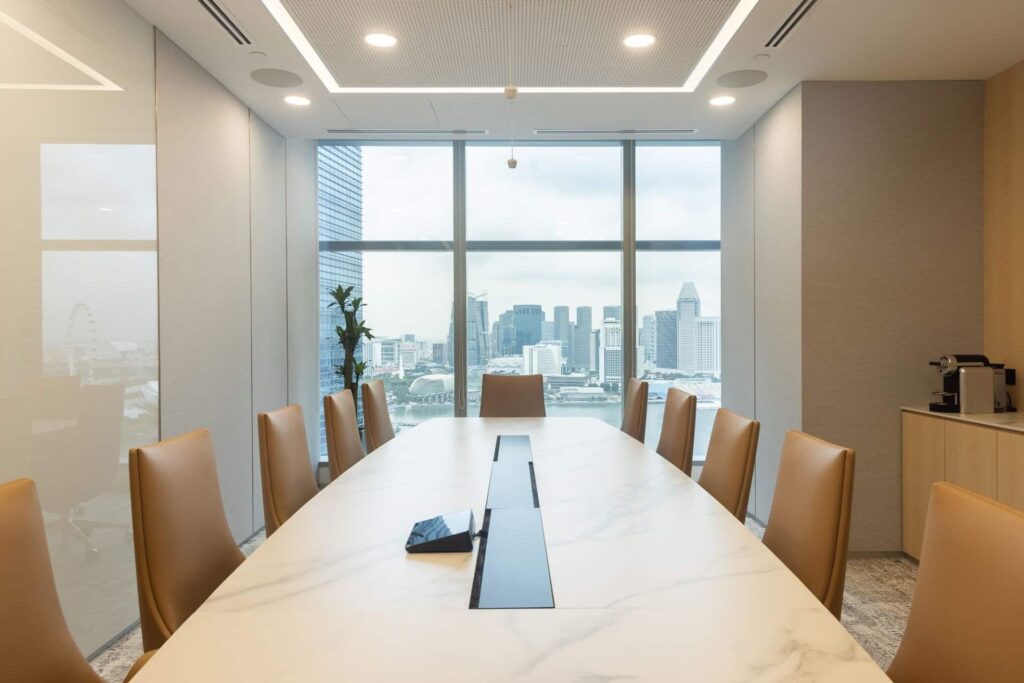
The legal workplace is at a global inflection point. The traditional hallmarks of a law firm that used to entail closed doors, corner suites, and physical libraries, are giving way to spaces defined by flexibility, collaboration, and technology-integration. This transformation is also crucial for law firms in Asia to consider, where maintaining an image of prestige and stability must now coexist with the demands of a modern, hybrid workforce.
Here is a look at five global design shifts and how Asian law firms can adapt them to gain a competitive edge in the war for talent and client trust.
1. Reimagining Prestige: The Shift from Status Symbols to Equitable Design
Global firms are realising that the old model of large, hierarchical private offices is a deterrent to the next generation of talent and an inefficient use of premium real estate. The trend is moving towards universal-sized offices for attorneys and transforming the saved space into high-quality, shared amenities. This balances the need for junior lawyer mentorship and collaboration, with the expectation of seniority and confidentiality.
- Key Design Action: Implement hybrid layouts with shared team neighbourhoods that include easily accessible, enclosed, and acoustically secure focus rooms for private work and sensitive client calls.
2. Future-Proofing Operations: Integrating Seamless Technology and Agility
The global acceleration of remote teams and virtual proceedings demand that the physical office be fully integrated with a firm’s digital workflow. Modern design must facilitate secure, seamless collaboration across borders and between in-office and remote work.
- Key Design Action: Create fully-equipped virtual hearing rooms and small, technologically advanced video conferencing pods that ensure smooth, secure interactions. Simultaneously, the reduction in the need for physical data storage due to the digitisation of libraries and record systems, frees up space for more agile, collaborative meeting areas.
3. Maximising Value: Achieving Efficiency Through Adaptability
In major Asian cities, premium real estate costs make space utilisation a critical business concern. The global trend is to downsize the total footprint while increasing the quality and flexibility of the remaining space which is also a concept known as “Day-Three Design”. They are using smart planning to create a workspace that is adaptable to future market changes or workforce shifts.
- Key Design Action: Adopt modular furniture and reconfigurable partitions to ensure the workspace can easily pivot between client events, team training, and focused work. This allows firms to operate efficiently with a smaller footprint without sacrificing the perception of stability.
4. The Talent Imperative: Designing a Restorative Workplace
The high-stress nature of the legal profession is driving a global demand for workplaces that actively support employee well-being and mental health. The office is evolving into an proactive space for managing stress and reducing burnout, to gain a competitive advantage in talent attraction.
- Key Design Action: Prioritise natural light and biophilic design to create a calm environment. Invest in comfortable, hospitality-inspired breakout lounges and dedicated quiet zones to boost employee morale and culture.
5. Beyond Aesthetics: Using Design to Anchor Culture and Client Trust
The office is more than a location; it is the most visible expression of a firm’s brand, culture, and promise to its clients. Global firms are also leveraging design to articulate their values and attract the best talent.
- Key Design Action: Treat the client-facing areas like a high-end hospitality experience, blending professionalism with comfort. Utilise design and architectural choices to physically express the firm’s brand identity, reinforcing client trust and establishing a powerful, modern cultural hub for employees.
Ready to Master the Balance?
Successfully navigating these global shifts requires more than just aesthetics; it demands a strategic and cultural blueprint. Law firms in Asia must thoughtfully combine international best practices with deep local professional norms.
Download our exclusive, in-depth eBook, “The Future of Legal Office Design: Global Trends Shaping Law Firms in Asia,” to get the detailed insights needed to transform your workspace into a powerful competitive asset.