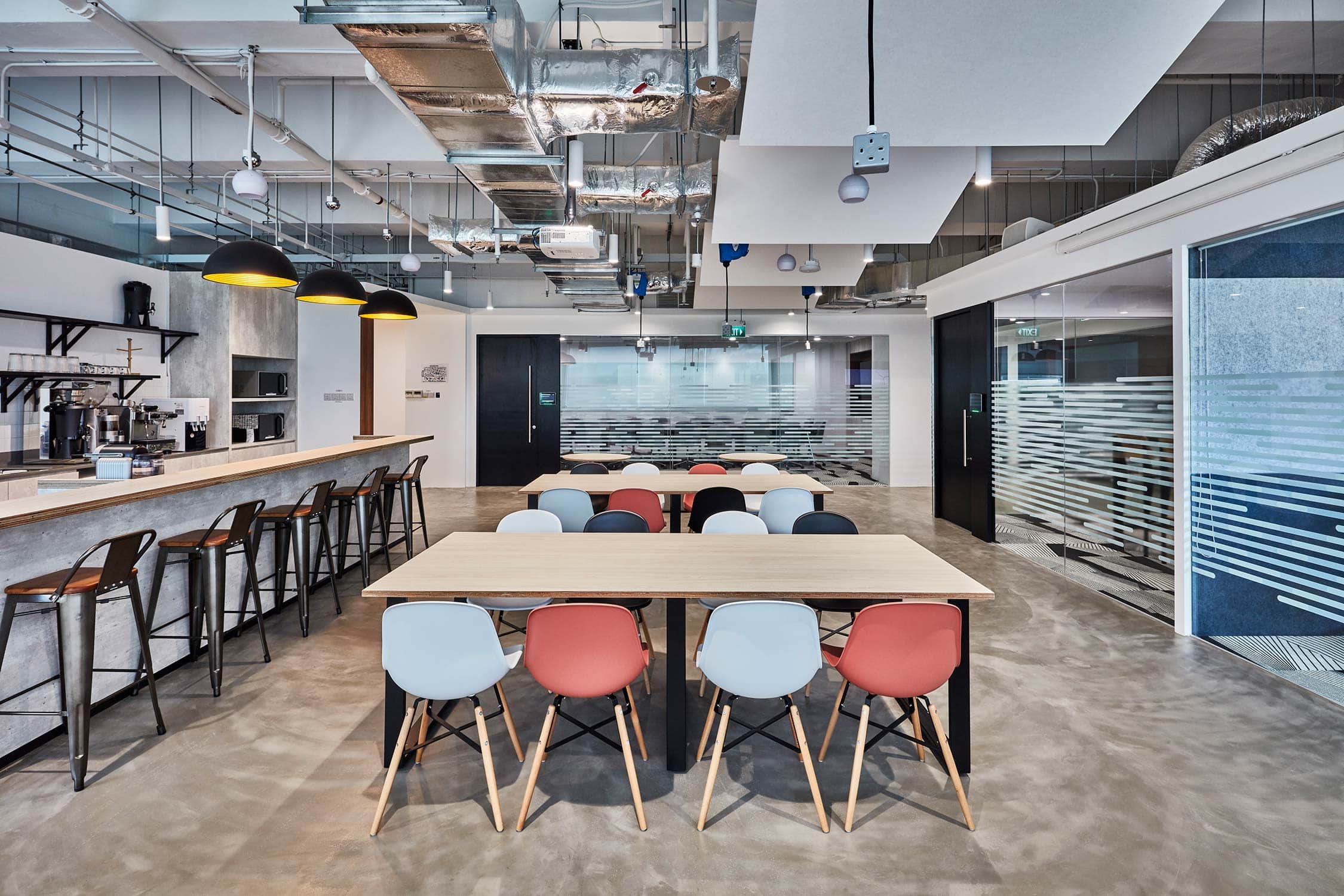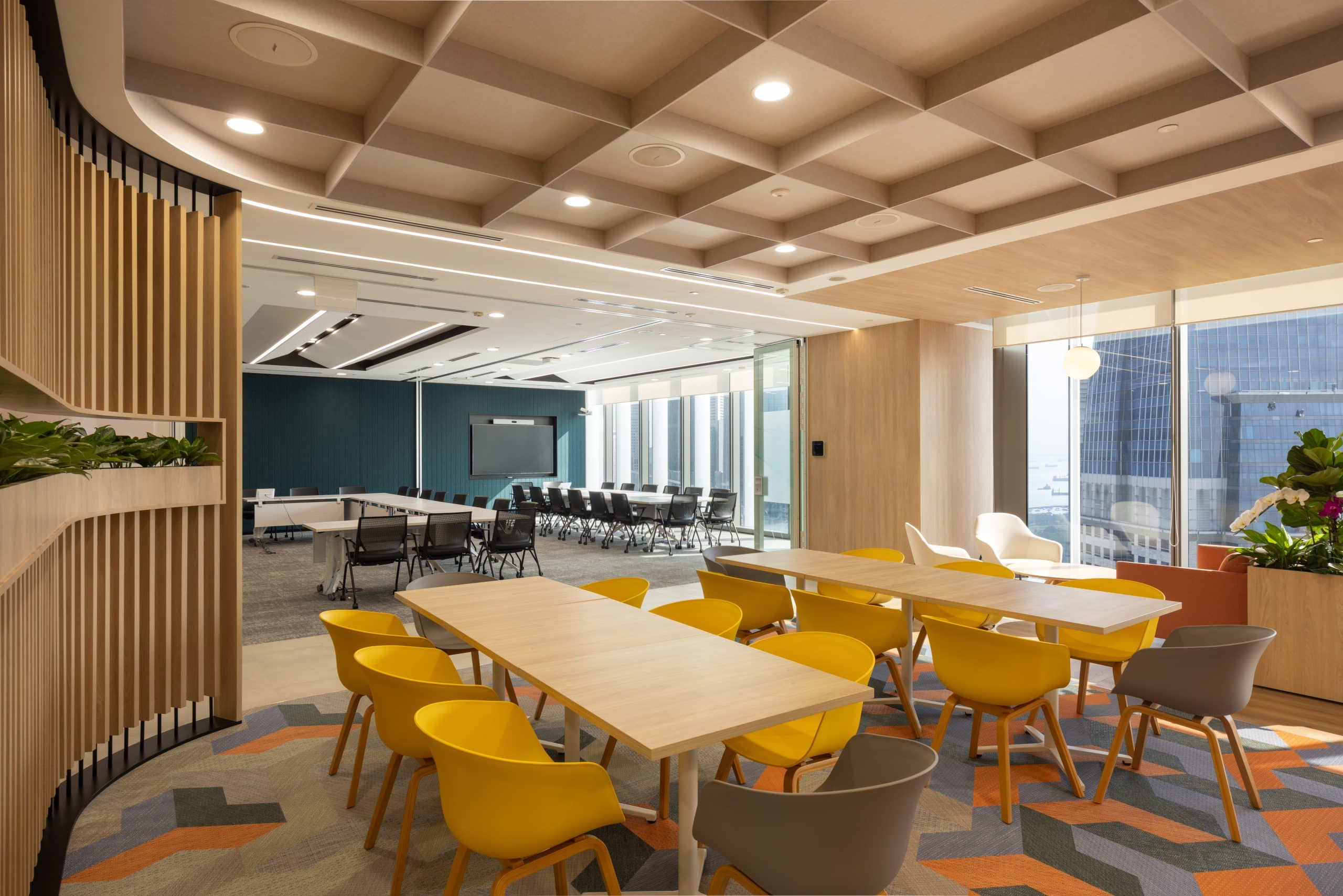
In 2026, the office has become a strategic driver of performance, culture, and retention. Yet many companies are still operating in spaces designed for a pre-hybrid, pre-digital reality that hinges on rigid hierarchies and static floor plans. This poses the risk of underutilised offices, disengaged teams, and missed opportunities for innovation.
Corporate office design in 2026 isn’t about chasing trends; it’s about designing an environment that responds as soon as your business evolves.
Here’s how leading organisations are rethinking corporate office design to stay ahead.
Design Offices Flexibly Around People And The Business
High-performing offices are no longer designed around departments; instead, they’re designed around behaviour and employee engagement. For this reason alone, many companies are now designing offices based on their team’s feedback and input.
Companies today are assessing behavioural work patterns to create efficient environments that support both innovation and well-being. There is a shift towards activity-based settings, such as quiet zones for deep work and collaboration hubs for brainstorming.
Alongside modular layouts that remain versatile enough for any project, leaning into modular furniture and creating intentional zones that can be reconfigured effortlessly will also keep up with changes in business objectives years down the line.
Planning for resilience into your office design from the outset enables your company to scale without tearing down walls and risking downtime. As the rhythm of work changes over time, an adaptable office layout becomes a modern workplace trend to future-proof your space.
Plan for Hybrid Teams with Unified Workplace Experiences
The hybrid work model was drastically popularised post-pandemic, and for many companies, it has become the norm. This shift means businesses need to create spaces that allow work to continue seamlessly, both in and out of the office.
The question of how employees interact within a company is the priority here. You want to foster a sense of flexibility that inspires your team, whether that’s offering various settings to work from or ensuring remote workers can equally contribute. To achieve this, you can build video-first meeting rooms that also prioritise acoustics, which allow everyone to be heard clearly, and incorporate hot-desking systems in the office. Creating an efficient space that supports hybrid teams keeps morale and satisfaction high.
Treat Technology as Part of the Design Strategy, Not an Add-On
The benefits of smart office technology integration can transform your workspace.
Think along the lines of IoT-enabled lighting that adjusts to the time of day, integrated management systems that track how your space is actually used, and seamless room-booking systems that ensure everyone feels like a part of the office rhythm, wherever they are.
In 2026, technology is the greatest catalyst for growth and innovation; treating it as an afterthought rather than a centrepiece is a mistake many businesses still make.
Make Sustainability a Long-Term Business Decision
Finally, an office that prioritises the environment is a direct investment in the health and mindset of the people within it. Not only does it demonstrate your values, but it creates a space that feels alive and restorative.
When you integrate natural light, high-quality air filtration, and biophilic elements, you’re creating an environment that puts your team’s well-being first.
Sustainable office design in 2026 is about cutting out the physical and digital clutter that slows a team down, while enhancing wellbeing and efficiency. This might involve integrating biophilic elements, such as plants to improve air quality, or installing smart lighting to minimise energy usage in the workplace. By stripping away these inefficiencies, you’re actively improving your team’s focus, too.
Future-Proof Offices by Planning for Change
The primary reason to future-proof your office comes back to longevity. In the business landscape, change is expected. Because of this, an office design that takes change into account from the start is the best way to accelerate your growth.
By now, it is evident that changes in technology and work patterns are no longer unforeseen. Modular designs, universal grid layouts, and power distribution systems are just a few of the many ways to ensure your workspace remains adaptive.
At Sennex, we specialise in commercial interior design across Asia. Our team is driven by forward-thinking design, which means we believe that every space should enhance both well-being and productivity.
Through our tailored office interior design services, we align your physical environment with the strategic needs of your people.
A space that ignites your team’s best ideas is always future-proof.
If you’re looking to build for the future, reach out to our team of experts today.
FAQs
How are corporate office design trends in 2026 different from previous years?
In 2026, the focus has shifted from perks to performance and intention. Modern design prioritises high-level acoustics, digital parity for hybrid meetings, and activity-based settings that actually support deep work rather than just open-plan chaos.
Why is flexibility important in modern workplace strategy?
A flexible strategy allows you to scale your headcount or pivot your business model without the massive cost and downtime of a traditional renovation. It turns your office into a dynamic tool rather than a static expense.
How does hybrid working influence corporate office planning?
Hybrid working has turned the office into a destination for collaboration. Planning now focuses on Equity-First design, ensuring that those dialling in remotely have the same presence and influence as those in the room. This means fewer assigned desks and more tech-integrated huddle spaces.
How far ahead should businesses plan when redesigning their office?
Ideally, you should be looking five to ten years ahead. While you can’t predict the exact tech of the next decade, you can plan the bones of your office – power grids, HVAC, and modular partitions – to be accessible and over-engineered so they can handle whatever comes next.
What are the biggest risks of not future-proofing an office design?
The primary risks are financial and cultural. Without a future-proof design, you face high sunk costs when your team outgrows a rigid layout. Culturally, a dated, friction-heavy office becomes a major hurdle in attracting and retaining top-tier talent who expect a modern environment.