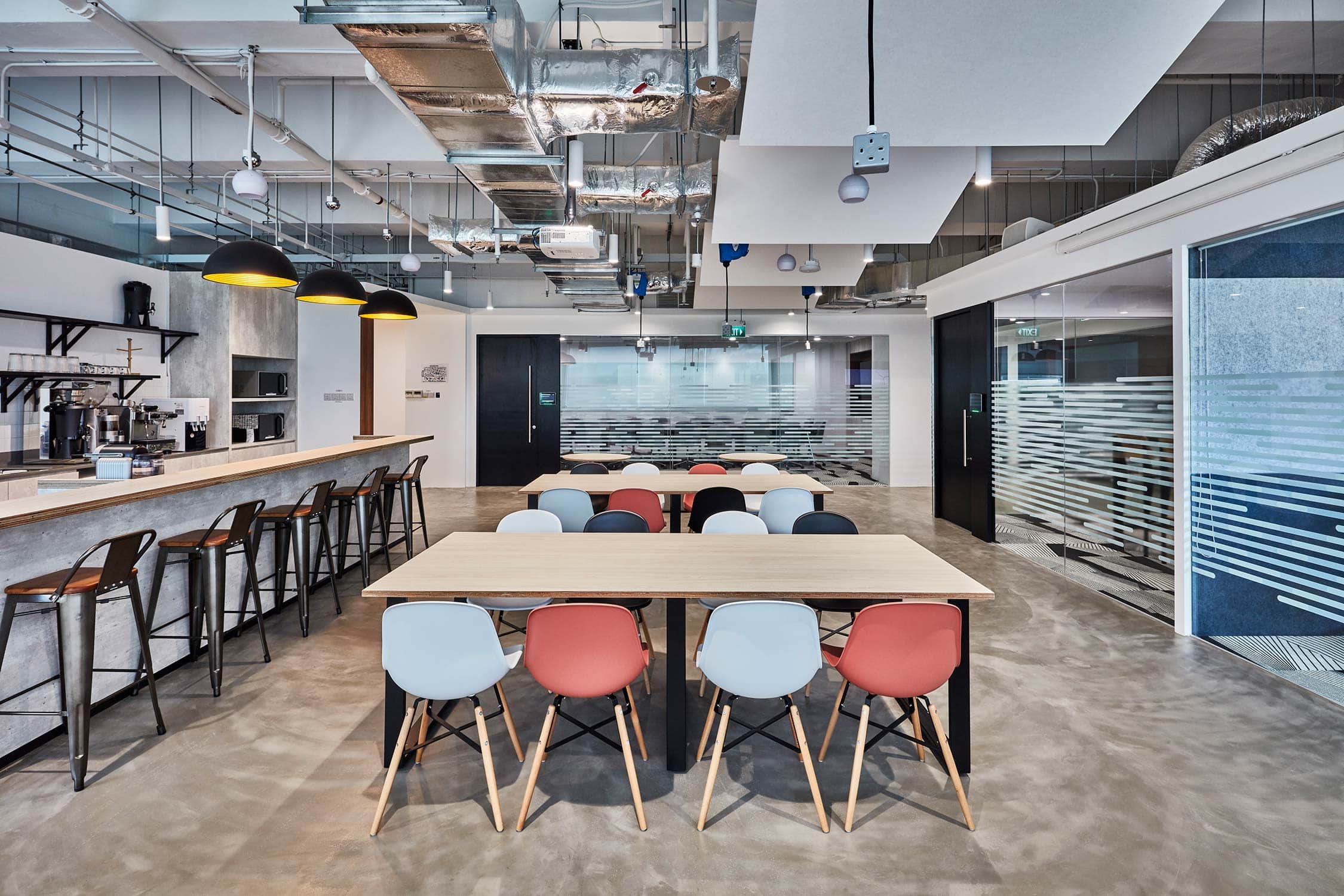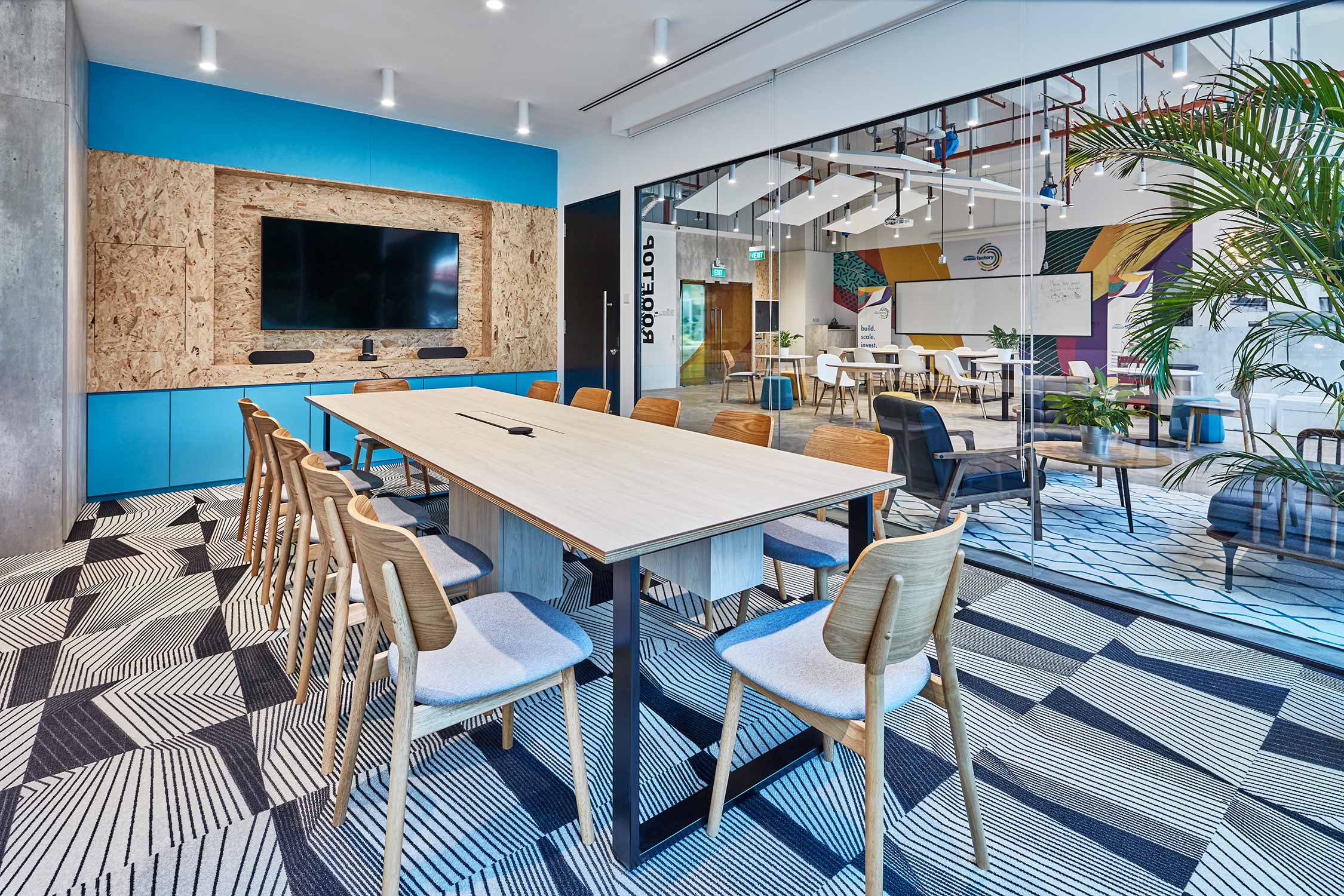
Studies show that good office design can increase employee productivity by up to 20%. From this statistic, it becomes clear that environmental factors, such as natural lighting, acoustics, and modular spatial planning, can play a significant role in your business success.
A productive workplace requires careful planning and consideration. In this blog, we explore why a collaborative dialogue between your business and a design partner is essential to achieving these results.
Defining What Good Office Design Really Means Today
Good office design translates your operational requirements into a purpose-driven space. By working with an experienced commercial interior designer, the process evolves beyond aesthetics into a comprehensive strategy.
Your layout is tactical: furniture might become modular, acoustics may need tailoring for specific tasks, and spaces are strategically allocated to enhance your team’s unique strengths. When these requirements are met, teams aren’t confined by their spaces. Instead, they’re empowered by them.
How Good Office Design Starts with Understanding Business Strategy
Understanding your business strategy is imperative. It guides your spatial strategy, which dictates how people move within an office. The floor plan outlines your day-to-day operations and is engineered to support your specific model:
- Hybrid Models
Flexibility is key. For hybrid models, this requires high-density integrated AV infrastructure and smart configurations like hot-desking, occupancy sensors, and booking platforms to manage real-time demand. The office functions as a collaborative environment, and the design follows this lead, prioritising a higher ratio of meeting and shared zones. - Full-Time Office Teams
The focus for fully in-office teams shifts to ergonomic stability and zoning. Personal desks and dedicated quiet areas become technical requirements for sustaining focus over long periods. It might also call for extra comforts like a lunch corner or social recreation areas.
Designing To Support Workplace Productivity
A high-performance office design is built to support productivity. This is often hindered by a lack of spatial variety, where the physical space fails to provide the necessary acoustics or dedicated zones for your team. When an office lacks the capacity to eliminate these distractions, it becomes a structural barrier to execution. Ultimately, your team’s output decreases, and the business suffers.
For this reason, businesses must understand which environments are best suited for their team. While creative businesses often favour open-plan layouts to encourage interaction, the same design can be counterproductive for businesses that require long periods of solitary focus.
By collaborating with an office design and build service expert, you can implement intentional zoning, where productivity is possible for everyone, whether quiet or collaborative.
Culture & Brand Expression Through Office Design
Brand values are most effectively revealed through architecture and spatial allocation. For instance, investing in ergonomic furniture showcases your commitment to employee wellbeing, while an open-space layout reinforces creativity and transparency.
Once the structural logic is set, the brand is further expressed through colour, materiality, and a design aesthetic that encapsulates your vision. Good office design balances professionalism with a sense of warmth.
Working Towards Building a Great Place to Work
Lastly, good design doesn’t just support your team’s productivity; it fosters their wellbeing. This employee experience is central to business success.
Good interior office design fosters wellbeing through the following:
- Acoustics
Using sound-absorbing materials and baffles to turn a stressful environment into an inspiring one. - Ergonomics
Integrating comfortable seating arrangements, including sit-stand options, to prioritise employees’ physical health and keep teams energised. - Natural Lighting
Utilising light for its restorative effect, reducing eye strain and improving mental clarity.
These are good workplace design principles that naturally fuel motivation and boost staff retention.
Why Good Office Design Is a Long-Term Business Decision
Your office is more than a place that houses your employees. It also houses your overall business growth. While office design trends are fleeting, the future of workplace design belongs to spaces that prioritise their people.
As office interior design experts in Asia, we understand the science behind creating people-centric workplaces. Our Sennex team uses Worktech to gather the necessary data to create an environment that truly supports your employees as individuals and the way they work as a unit. This helps us understand your goals from the start. We translate these insights into a design that reflects your brand and removes the structural barriers to your team’s success.
If you’re looking to make an investment into your office design, reach out to our team today.
FAQ’s
Q: What defines good office design in modern workplaces?
A: Good design is defined by flexibility and purpose. It creates an environment that supports different work modes, from dynamic collaboration to quiet, individual focus. A successful office uses smart zoning and integrated technology to ensure the space adapts to the user’s needs.
Q: How does good office design influence employee productivity and wellbeing?
A: It works by removing physical and mental friction. Proper acoustics reduce distractions, ergonomic furniture prevents physical fatigue, and natural lighting improves mental clarity.
Q: What is the difference between good office layout design and good office interior design?
A: Office layout design focuses on the strategic floor plan, including the placement of departments, traffic flow, and the ratio of meeting rooms to desks. Office interior design focuses on the environmental experience, including lighting, furniture specifications, materials, and brand expression.
Q: Can good office design principles apply to different types of businesses?
A: Yes. While the core principles of comfort, light, and functional zones remain the same, the application changes based on the industry. A law firm may require more private, quiet zones, while a creative agency may prioritise open, collaborative spaces.
Q: How often should office design be reviewed or updated?
A: An office should be reviewed every 2 to 3 years. Changes in headcount, technology, or work-from-home ratios often create inefficiencies. Regular audits help ensure the space still aligns with how your team works.