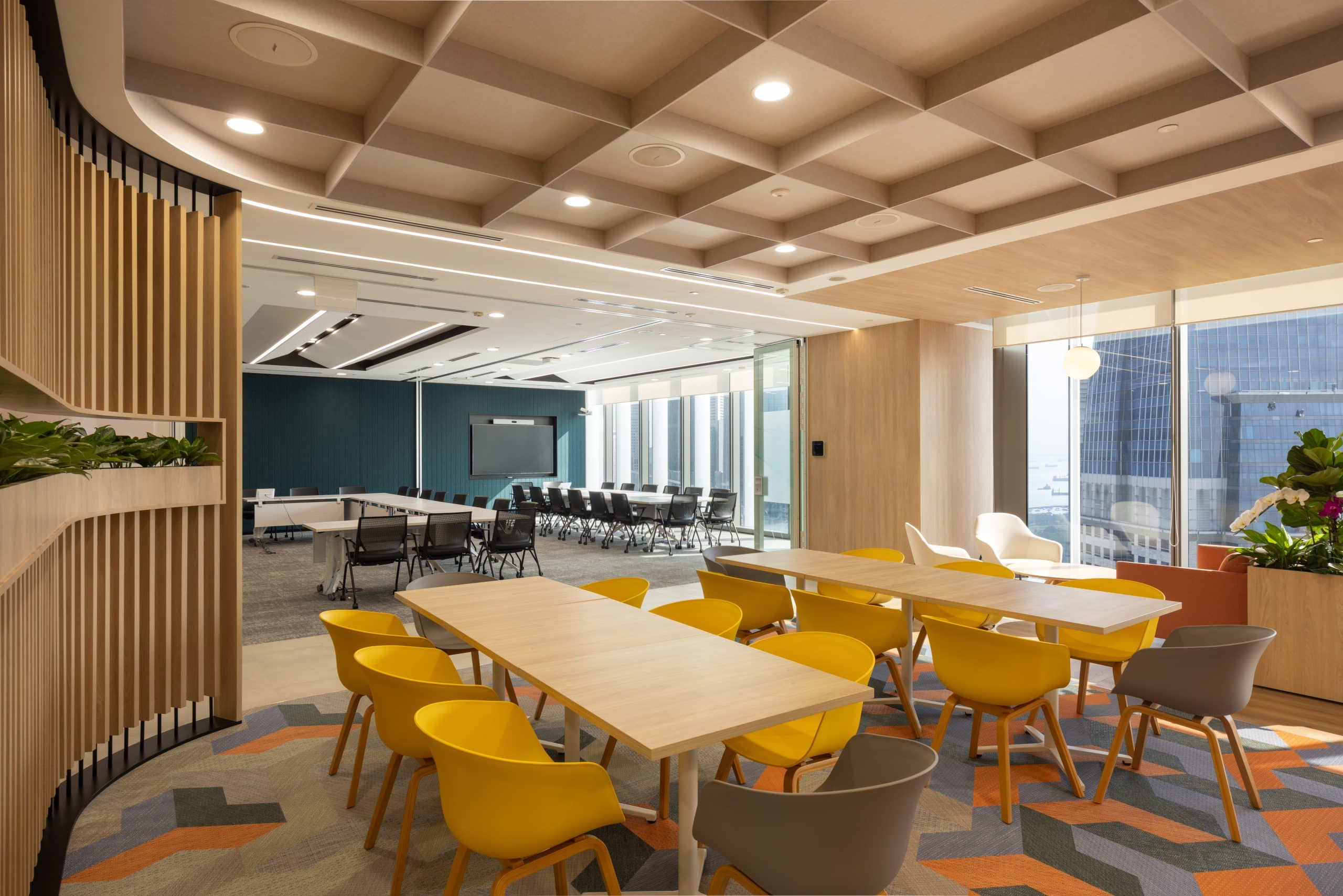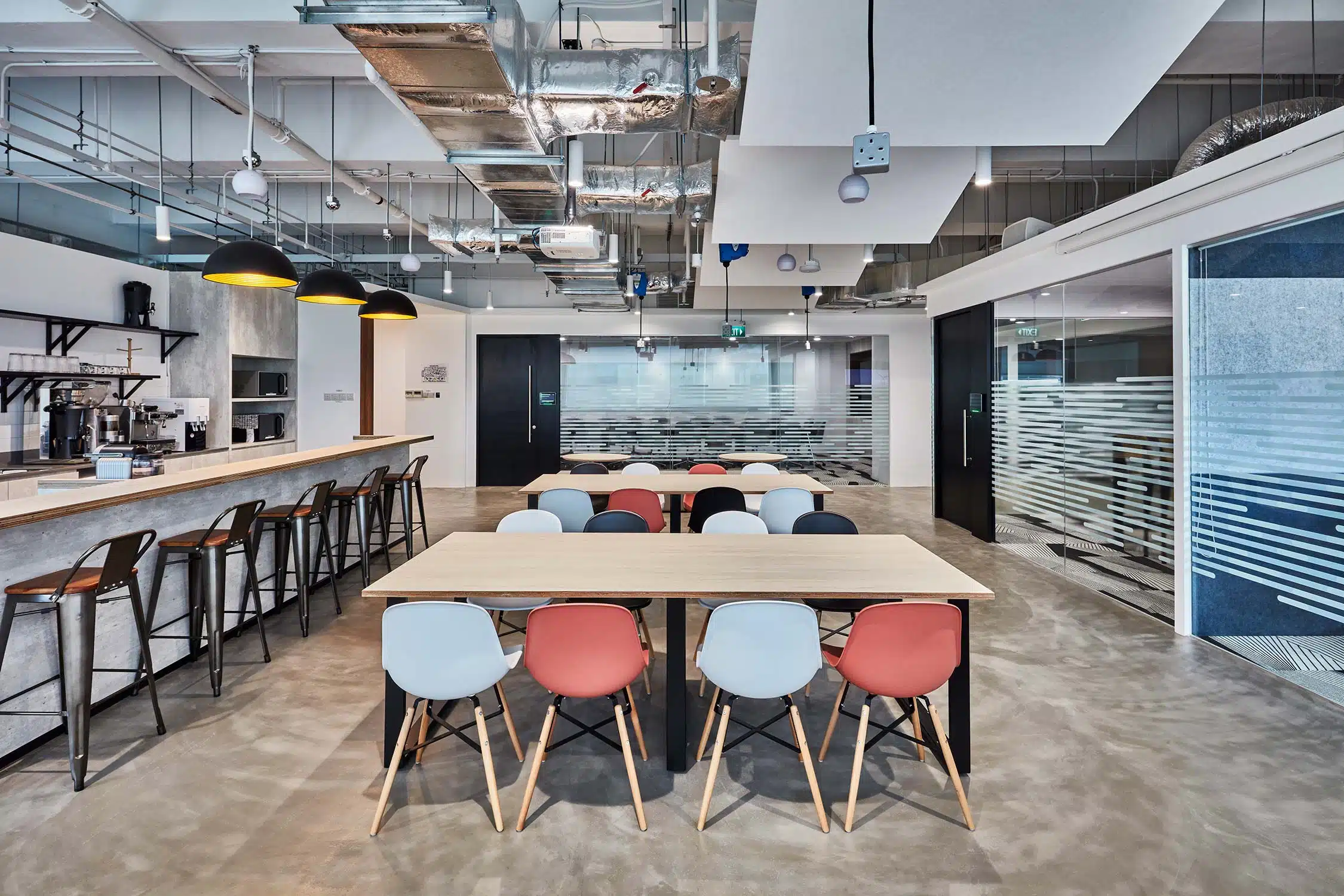
For 2026, flexible corporate design is becoming one of the most strategic investments businesses can make. Recent workplace studies continue to show that adaptable office environments can improve employee engagement, collaboration, and overall workplace satisfaction.
A team’s effectiveness is closely tied to the environment they work in. As workplace expectations continue to evolve, businesses need spaces that can adapt alongside their staff. In this blog, we break down the importance of flexible design and how your business can successfully incorporate these elements into your workspace.
Does your business need a flexible office design?
Most businesses will benefit profoundly from flexible office design. Employees work differently depending on the task at hand. An adaptable workplace gives people access to environments that support focus, collaboration, and day-to-day efficiency.
With hybrid work established as the global standard, design must facilitate seamless transitions between remote and in-office collaboration. To achieve this, leadership must evaluate space through three lenses: cross-functional collaboration, technological integration, and employee well-being.
What are the benefits of a flexible office design?
A flexible office design eliminates environmental barriers, resulting in higher-quality output.
Here are three ways flexibility can benefit your business:
- Optimised Workplace
Modular furniture allows spaces to be reconfigured instantly for large-scale projects or deep, focused work. By moving away from fixed seating, businesses can use space more efficiently based on changing operational and individual needs. This efficiency reduces overhead while ensuring the environment remains conducive to communication.
- Dynamic Collaboration
Flexibility facilitates the spontaneous human interactions that drive innovation. By implementing specialised zones, such as breakout rooms, lounges, and standing stations, you empower employees to choose the environment best suited for the task at hand. This level of choice encourages stronger collaboration, greater comfort, and more effective ways of working.
- Enhanced Employee Well-Being
Today’s workforce places greater emphasis on work-life balance and the overall workplace experience. According to Randstad’s latest studies, 83% of employees deem balance more important than pay. Consequently, businesses must respond with a workspace that supports this shift or risk losing their top talent. An agile office design directly addresses this by providing an environment that reduces stress and accommodates the diverse needs of a modern workforce.
How to Design a Flexible Office Space in 2026
When people think of business growth, they often think of external investments or expanding their team. But the most overlooked investment is the workplace itself, where flexibility creates the conditions for greater innovation, adaptability, and growth.
If you’re looking to upgrade your workspace, here are modern office design trends to prioritise in 2026:
- Technology Integration
Modern offices, particularly hybrid models, rely on advanced technology to ensure seamless communication between teams remotely and on-site. Meeting rooms should integrate high-definition displays, high-speed connectivity, digital booking systems, and smart lighting. In 2026, technology must actively shape the office design to facilitate high-level performance.
- Flexible Workstations
Fixed seating arrangements are outdated for today’s workforce. They’re quickly being replaced with modular furniture, multi-purpose areas, and quiet zones, allowing employees to choose their setting. Modular desks allow teams to cluster for brainstorming sessions or separate for individual focus. Multi-purpose areas can support informal meetings and social interactions, while quiet zones provide the acoustic privacy for deep concentration.
- Acoustic Solutions
Work areas require sound management to sustain focus, helping employees maximise their productivity. Integrating acoustic panels, sound-absorbing materials, and private meeting rooms helps minimise distractions across the office. Effective acoustic planning ensures collaborative discussions can co-exist with focused individual work, which is an essential consideration in modern office environments.
- Biophilic Design
Biophilic elements demonstrate a genuine commitment to employee well-being. Incorporating indoor plants, natural lighting, and organic materials creates a healthier, more engaging environment for your team. Beyond aesthetics, these elements provide a calming influence during high-stress periods and contribute to a more comfortable and engaging workplace experience. Prioritising these natural features leads to higher employee satisfaction and a more positive workplace culture.
- Sustainability
Lastly, modern office design in 2026 integrates sustainability into every space. Energy-efficient lighting systems reduce operational costs, while sustainable materials support long-term environmental goals. Beyond environmental benefits, sustainable office design can also contribute to employee comfort through optimised lighting quality and improved indoor environmental conditions.
Ready to Design Your Flexible Corporate Office?
The highest-performing offices are adaptable enough to evolve with your business goals — today, tomorrow, and ten years from now. They are designed to support the way your teams operate today while remaining adaptable for future growth.
Every team operates differently, and your workplace must reflect that. At Sennex, we specialise in creating
tailored office interior design that meets the demands of today. Our team has over two decades of experience delivering workspaces that serve long-term value to your business.
If you are looking to transform your
office design in Singapore, reach out to our consultants today.
FAQ’s
Q: What are the key elements of a flexible office design?
A: The core elements include modular furniture, hot-desking capabilities, and activity-based zones. These spaces allow for rapid reconfiguration and provide employees with specialised environments, such as quiet pods or open lounges, tailored to specific tasks.
Q: How does flexible design support a hybrid workforce?
A: Flexible design converts the office into a high-value collaboration hub rather than a sea of underused desks. By prioritising shared spaces and integrated technology, flexible office interior design ensures seamless communication between in-office and remote staff, making the workplace ideal for teamwork.
Q: Does a flexible office layout improve employee productivity?
A: Yes. By providing autonomy over where they work, employees can escape distractions and choose environments that align with their tasks. This reduces environmental stress and optimises output, especially when supported by professional office design.