Have you ever been in an office environment where you’re constantly zoning in and out, unable to sustain focus? Perhaps you’ve resorted to earplugs or music, yet the office chatter still manages to break through. In a modern workspace, poor acoustics should no longer be a barrier that your employees face.
In this blog, we discuss the five ways office acoustics design can drive productivity and concentration.
Shaping Layout Decisions Through Office Acoustics Design
In office design, sound behaviour refers to how noise travels, reflects, and is absorbed within the workspace. When you understand these patterns, you can use your layout to your advantage by offering a variety of settings for your team.
- Strategic Zoning
Rather than mixing quiet and loud activities, creating zones allows you to alter the acoustics of your workplace. For example, grouping collaboration zones together creates a high-energy space where noise is expected. This means prioritising sound-absorbing materials so that noise doesn’t trickle down to areas that require focus. - Controlled Circulation
Your employees are naturally moving around the office. By mapping primary walkways away from quiet spaces, you avoid distracting your team with every passing conversation. - Spatial Planning
Room acoustics in office spaces often avoid echo chambers because they hinder concentration. When sound reverberates, it can escalate the volume of the room and break down communication. By prioritising staggered layouts, you can create an atmosphere that is both calm and balanced.
Improving Focus and Productivity Through Better Sound Management
Today, focus is hard to find, but even harder to sustain. It only takes one notification or a loud conversation near your desk to break your flow. Getting it back is rarely ever immediate.
Thoughtful acoustic design protects the energy of your team by ensuring their focus isn’t lost.
In the modern office, certain tasks require deep, intentional thought, whereas others require dynamic exchanges. Separating them is key to a productive office environment:
- Silent Spaces: This space needs to protect your team’s mental bandwidth. Reserved for more complex tasks, these zones are built using sound insulation and acoustic partitions. The goal is to tune out external noise so that employees can tune in to what is in front of them.
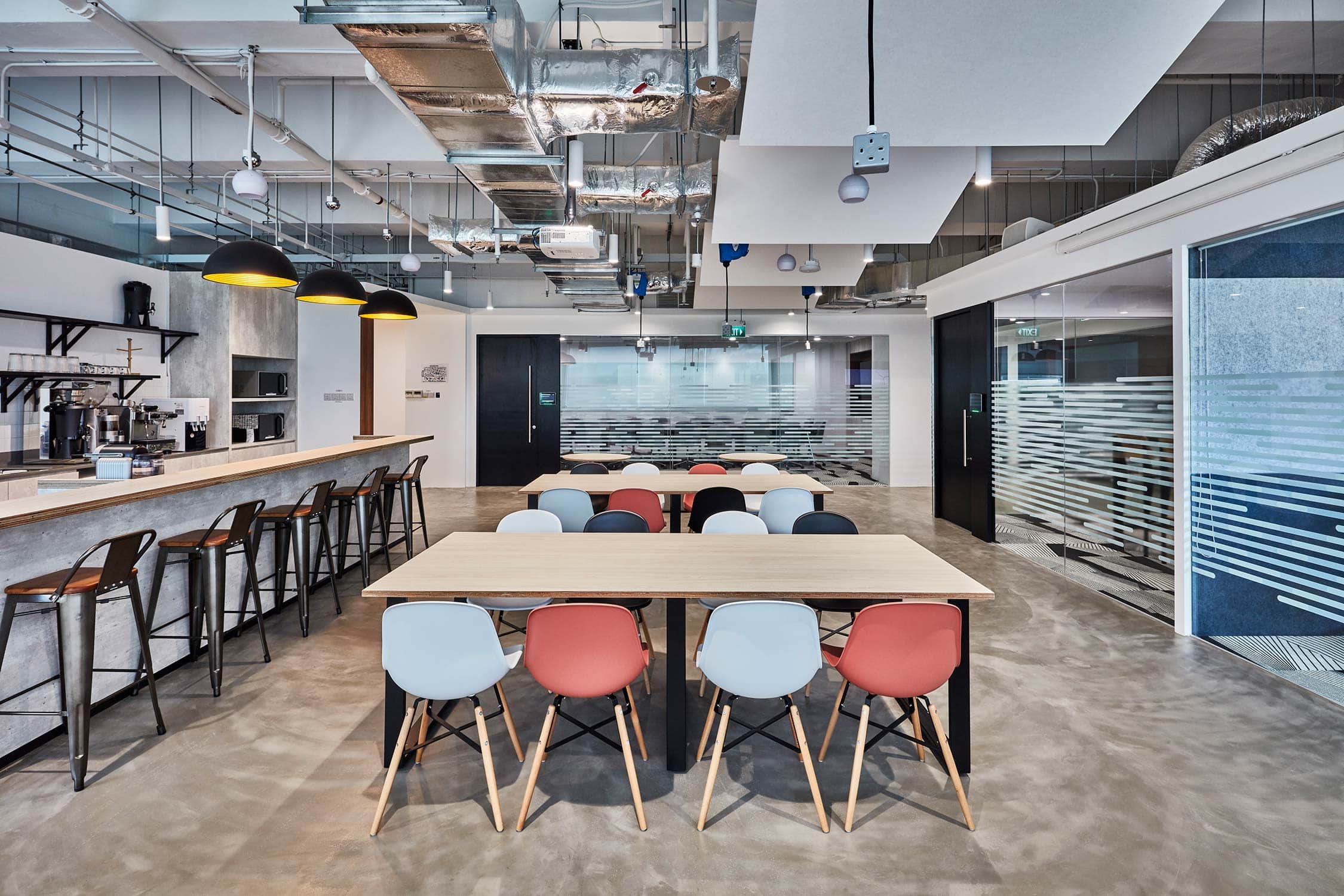
- Collaborative Spaces: This is where dynamic brainstorms and excitement over new ideas occur. By installing suspended acoustic clouds, you ensure that all the creative energy stays within the zone.
Balancing these acoustics enables you to create an atmosphere that fuels both connection and productivity. It is a design that your team will greatly appreciate and benefit from.
Designing Open Plan Offices With Acoustic Comfort in Mind
Open-plan offices are designed to encourage collaboration and flexibility between colleagues. This is often where the best ideas are discovered. However, these innovative layouts come with their own set of distractions, creating a blanket of noise that can be difficult to escape.
Room acoustics in these spaces are crucial. When managed well, they can create a comfortable environment where no one is shouting to be heard. Conversely, effective design also prevents a space from becoming so unnervingly quiet that the sharp click of a keyboard feels like a major disruption.
- Strategic Absorption
Sound-absorbing materials, such as acoustic panels, carpeting, and soft wall finishes, transform how noise interacts with the room. These materials ensure sound stays within its intended zone, allowing conversations to feel crisp and controlled. - The Ceiling
Ceilings act as a crucial noise-control surface because they are often the largest unobstructed area in any office. By installing suspended acoustic baffles or clouds, you can intercept sound waves as they travel upward, which prevents them from reflecting into the workspace. These elements keep quiet zones hushed and private. - Functional Decor
Many modern design elements serve as sound-management tools, such as felt-wrapped lighting, 3D textured wall art, or biophilic moss walls. They imbue style and visual character, but at the same time soften the environment so that unwanted noises fade into the background.
Flooring and Surface Treatment
Acoustic planning for offices isn’t just about ceilings and zones, but the very surfaces we move across. Think of the subtle sounds of footsteps, rolling chairs, and dropped pens or notebooks. If you don’t notice them, chances are your flooring is working exactly as it should.
In a well-designed space, the floor plays a quiet and often overlooked role. Hard, untreated surfaces, such as polished concrete or standard tile, can amplify these actions into sharp, percussive echoes that radiate across the entire floor.
This is why choosing materials with High Impact Sound Reduction (ISR) ratings is a critical design decision rather than just a technical one. Many offices prioritise carpets and Luxury Vinyl Tile (LVT) for quiet zones for their noise-absorbing properties.
Wall Materials & Vertical Structures for Sound Absorption
Every office is designed for a purpose, and its materials should be a direct reflection of that. This is how you orchestrate a space that feels intentional and supportive.
Take a look at these 3 key zones:
- Collaborative Zones: In areas designed for brainstorming, you want to keep the energy high but the noise private. Porous materials, such as perforated timber panels, felt-wrapped dividers, or 3D cork tiles, help absorb voices within a space but prevent them from ricocheting across the floor.
- Private Meeting Rooms: These require total isolation. Since glass often leaks sound, double-glazed partitions are the ideal solution. The internal air gap creates a physical break that traps sound and ensures conversations are confidential.
- Breakout Spaces: For relaxation, indoor plant walls act as natural diffusers. Their irregular shapes scatter sound waves, creating a softer atmosphere that naturally lowers the room’s volume.
The impact of acoustics on office productivity is undeniable. It doesn’t matter how modern your office is; if your team can’t sustain focus over long periods of time, then the design needs to be reviewed.
If you’re looking for an office interior design company in Singapore, Sennex brings a holistic approach to every project. Our experts understand how employees move within an office and the elements that influence their performance.
We offer office design services in Singapore that go beyond simple floor plans and aesthetics. Our team looks into every detail to ensure your space is not only effective but future-driven too. Contact us to get started.
FAQs
Q: What is office acoustics design and why is it important?
A: Office acoustics design is the strategic management of sound within a workspace using layout, materials, and technology. It’s critical because it transforms a chaotic environment into a functional one, ensuring that noise doesn’t become a barrier to concentration or confidential communication.
Q: How do room acoustics affect productivity in office spaces?
A: Poor acoustics lead to cognitive overload. When the brain constantly filters out background noise, it drains mental energy, increasing stress and error rates. Research shows that well-managed acoustics can boost productivity by up to 66% by allowing for sustained deep work.
Q: What are common noise challenges in open-plan offices?
A: The biggest challenge is irrelevant speech (overhearing nearby conversations), followed by impact noise (footsteps/moving chairs) and reverberation (sound bouncing off hard surfaces like glass and concrete). Without zoning, these sounds travel unchecked across the floor.
Q: How can acoustic planning improve employee comfort?
A: It creates a sense of privacy and security. By reducing the sharpness of sounds and controlling echoes, planning lowers physical stress levels, reduces mental fatigue, and makes the office a more inclusive space to work in.
Q: When should acoustics be considered in the office design process?
A: Ideally, at the concept stage. Addressing acoustics during the initial floor planning is significantly more cost-effective and seamless than trying to fix a noisy office after the team has already moved in.